
Fatigue and Federal Violations in Nevada Truck Crashes

Nevada’s highways are vital transportation routes for the trucking industry. From I-15 and I-80 to U.S. Route 95, thousands of commercial trucks move through the state each day delivering cargo between California, Utah, and beyond. While this movement is essential to commerce, it also increases the risk of serious truck accidents, especially when drivers are overworked or operating in violation of federal safety rules.
Fatigue is one of the most dangerous conditions a truck driver can face. Long hours, tight delivery schedules, and insufficient rest can leave drivers dangerously impaired, leading to deadly crashes. The Federal Motor Carrier Safety Administration (FMCSA) has strict regulations in place to limit driving time and protect both drivers and the public. But when these rules are ignored, the consequences can be catastrophic.
Understanding the role of fatigue and federal violations in Nevada truck accidents is key to holding trucking companies accountable and recovering full compensation for injury victims.
Why Fatigue Is So Dangerous for Truck Drivers
Fatigue impairs reaction time, decision-making, and attention span. It can cause drivers to drift between lanes, fail to notice traffic changes, or even fall asleep at the wheel. For truck drivers operating vehicles that weigh 80,000 pounds or more, the margin for error is incredibly small.
According to the National Highway Traffic Safety Administration (NHTSA), drowsy driving causes over 90,000 crashes and nearly 800 deaths each year. The actual numbers may be much higher, as fatigue is often underreported.

For truckers, the risk of fatigue is compounded by:
- Overnight driving schedules
- Long stretches of monotonous highway driving
- Pressure to meet delivery deadlines
- Poor sleep conditions in sleeper berths
- Health problems linked to sedentary lifestyles and irregular hours
Even mild drowsiness can mimic the effects of alcohol. After 18 hours awake, a driver’s cognitive performance is comparable to someone with a blood alcohol concentration of 0.05%.
For a free legal consultation, call (725) 900-9000
Federal Hours-of-Service Regulations
To reduce the risk of fatigue-related crashes, the Federal Motor Carrier Safety Administration (FMCSA) enforces strict Hours-of-Service (HOS) regulations that apply to most commercial drivers.
Key limits for property-carrying drivers include:
- 11-hour driving limit: Drivers may drive a maximum of 11 hours after 10 consecutive hours off duty
- 14-hour window: Drivers cannot drive beyond the 14th consecutive hour after coming on duty
- 30-minute break: A break is required after 8 hours of driving time
- 60/70-hour limit: Drivers cannot exceed 60 hours in 7 days or 70 hours in 8 days, depending on the company’s operations
These regulations are designed to ensure drivers have adequate rest and recovery time. Violations often result in recordkeeping penalties or driver disqualification. More importantly, they may establish liability when a violation contributes to a crash.

Common Violations Found in Truck Crash Investigations
When a truck accident occurs, investigators often examine whether the driver or trucking company violated federal safety rules. Common violations include:
- Driving beyond the 11-hour daily limit
- Falsifying logbooks or electronic logging device (ELD) data
- Pressuring drivers to meet unrealistic delivery schedules
- Skipping required rest breaks
- Operating without required hours-of-service records
- Failing to monitor driver logs or limit driving hours company-wide
If a driver involved in a Nevada crash is found to have exceeded federal limits, that evidence can be used to demonstrate negligence and support a personal injury claim.
Click to contact our personal injury lawyers today
Electronic Logging Devices (ELDs)
Since 2017, most commercial trucks are required to use Electronic Logging Devices (ELDs) to automatically track driving time. These devices record:
- Hours spent driving
- Breaks and rest periods
- Start and stop times
- Engine hours and vehicle movement
ELD data is essential for identifying whether a driver was compliant with HOS rules before the crash. If the data shows that the driver was over hours or had not taken required breaks, it can support claims that fatigue contributed to the accident.
Trucking companies are responsible for ensuring their drivers use ELDs properly and retain records for at least six months.

Complete a Free Case Evaluation form now
How Fatigue Leads to Crashes on Nevada Roads
Fatigue can cause a variety of dangerous driving behaviors, including:
- Slower reaction time to traffic changes
- Failure to maintain lane position
- Missing exit ramps or road signs
- Inability to judge speed or distance
- Rolling through stop signs or traffic signals
- Overcorrecting during emergency maneuvers
In high-speed zones like I-15 between Las Vegas and Mesquite, even a brief lapse in attention can result in multi-vehicle collisions. Nevada’s desert highways are especially dangerous at night, when visibility is reduced and fatigue is more likely to set in.
Liability in Fatigue-Related Truck Accidents
Under Nevada law, injury victims can pursue a personal injury claim against any party whose negligence contributed to the crash. In fatigue-related truck accidents, potentially liable parties include:
- The truck driver: For operating in violation of federal hours-of-service regulations or failing to pull over when drowsy
- The trucking company: For encouraging or requiring illegal driving hours, failing to monitor logs, or setting unrealistic delivery schedules
- Third-party logistics providers: For scheduling delivery routes that promote overwork
- Maintenance providers: If poor vehicle condition contributed to the crash
- Truck manufacturers: If a defect made the truck more difficult to control
To hold these parties accountable, your legal team must prove that their actions, or failure to act, led directly to the accident and your injuries.
Evidence Used in Fatigue-Related Cases
Fatigue can be difficult to prove without direct admission from the driver. However, experienced truck accident attorneys know how to gather the evidence needed to build a strong claim.
Types of evidence may include:
- ELD records and GPS data
- Dispatch and delivery logs
- Cell phone records
- Driver medical history or sleep apnea diagnosis
- Witness statements describing erratic driving
- Black box data from the truck
- Driver employment records and training documents
- Video footage from traffic cameras or dash cams
This evidence can demonstrate patterns of overwork, lack of rest, or disregard for safety rules.
Compensation for Nevada Truck Accident Victims
Victims of fatigue-related truck crashes often suffer catastrophic injuries. These may include traumatic brain injuries, spinal cord injuries, multiple fractures, burns, or permanent disability. In many cases, recovery takes months or years.
Compensation available in Nevada may include:
- Medical bills (emergency care, surgery, rehab, future treatment)
- Lost wages and reduced future earning ability
- Emotional distress
- Permanent disability or disfigurement
- Loss of enjoyment of life
- Out-of-pocket expenses related to your care
How Van Law Firm Can Help
Van Law Firm represents truck accident victims throughout Nevada. Our attorneys understand the complexities of federal trucking regulations and know how to uncover evidence of fatigue, overwork, and safety violations.
We can:
- Investigate the driver’s logs and ELD data
- Identify FMCSA violations by the company or driver
- Preserve and analyze vehicle black box data
- Work with accident reconstruction experts
- Calculate the full extent of your damages
- Negotiate with commercial insurers on your behalf
- File a lawsuit if a fair settlement is not offered
Truck accident cases are not like standard car crash claims. They require a deep understanding of both state and federal law, as well as aggressive advocacy to hold powerful trucking companies accountable.
No Upfront Fees – You Only Pay If We Win
Van Law Firm handles all truck crash cases on a contingency fee basis, meaning:
- No upfront payments are required
- No hourly fees or retainers
- You pay nothing unless we recover compensation for you
We offer free consultations and case evaluations to help you understand your rights and next steps.
Contact Van Law Firm Today
If you or a loved one was injured in a Nevada truck crash caused by a fatigued driver or federal safety violation, you may be entitled to significant compensation. Let Van Law Firm help you hold negligent parties accountable and pursue the financial support you need to recover.
No obligation consultations are always free.
Let Us Help You! Call Now: (725) 900-9000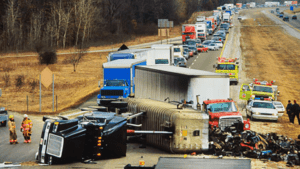 Truck Accident Laws and the Lawsuit Process
A distracted, tired, careless, and impaired truck driver can be a life-changing burden that will result in unforeseen consequences. Van Law has an immediate response team ready to visit the scene an...
 Driver Impairment in Trucking Accidents: A Dangerous Combination
Unfortunately, the abuse of alcohol and hard drugs has been a prevalent issue in the trucking industry for many years. The long, solitary hours and the pressure to log as many miles as possible lead...
 How the Graves Amendment Affects Moving Truck Cases
Every year, thousands and thousands of Americans hit the road in search of new environments and new opportunities. Some may choose to cram their sedans or load their pickups, while others opt for a ...
 The Dangers of Improper Semi-Truck Maintenance
When a heavily-loaded commercial truck collides with a smaller vehicle, serious or fatal injuries are almost inevitable. After a truck accident, you may be quick to pin the blame on driver error, bu...