
5 Most Common Types of Personal Injury Claims in Nevada

A personal injury claim arises whenever one person suffers physical or emotional harm because another party acted negligently, recklessly, or intentionally. Nevada law allows injured people to recover compensation for medical expenses, lost income, and pain and suffering, but every case starts with the same basic question: who owed a duty of care, and who breached it? Because Nevada follows a modified comparative negligence rule under NRS 41.141, an injured person can still recover damages even if they share some fault for the accident, so long as their percentage of responsibility does not exceed 50%. It’s also important to act quickly: in most cases, Nevada law gives an injured person only two years from the date of the incident to file a personal injury lawsuit under NRS 11.190(4)(e), though certain claims, such as wrongful death, run from a different triggering date. Below are the five types of personal injury claims that arise most often across Nevada.
1. Motor Vehicle Accidents
Motor vehicle collisions remain the single most common source of personal injury claims in Nevada, and Nevada’s mix of tourist traffic, rideshare vehicles, commercial trucking, and dense intersections adds to the risk. Regardless of what kind of vehicle is involved, the core legal question is the same: did the at-fault driver breach their duty to operate the vehicle reasonably, and did that breach cause the injury? Nevada requires drivers to carry minimum liability coverage of $25,000 per person and $50,000 per accident for bodily injury.
Liability in motor vehicle accidents can extend beyond the negligent driver. If the driver, such as a commercial truck driver, was acting within the scope of their employment at the time of the crash, the employer may share responsibility, which often opens access to commercial policies with significantly higher liability limits than traditional auto coverage. Rideshare collisions involving companies such as Uber or Lyft present unique insurance considerations under Nevada’s Transportation Network Company (TNC) regulations (NRS Chapter 706A). Under NRS 690B.470, the applicable coverage shifts depending on the driver’s active status: maintaining up to $50,000 per person in liability coverage while logged into the app awaiting a request, and scaling up to $1,000,000 in commercial liability protection once a ride has been accepted. Additionally, because Nevada does not require TNCs to maintain uninsured or underinsured motorist coverage, injured passengers may need to seek recovery through their own personal insurance policies if an at-fault driver lacks adequate coverage.
For a free legal consultation, call (725) 900-9000
2. Slip and Fall / Premises Liability
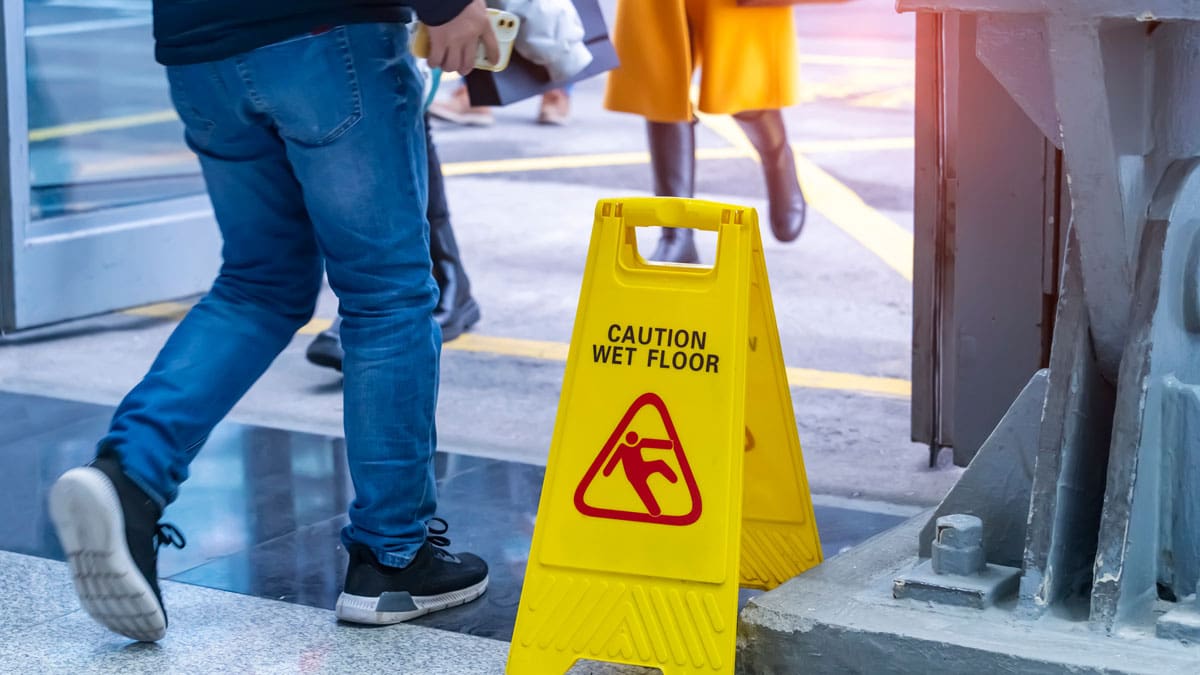
Property owners and occupiers in Nevada have a legal duty to keep their premises reasonably safe for guests, customers, and other lawful visitors. When a hazard, such as a wet floor, broken stair, uneven walkway, or inadequate lighting, causes a visitor to suffer injury, the injured party may have a premises liability claim. To succeed, the injured person generally must show that the property owner knew or should have known about the hazard and failed to correct or warn of it within a reasonable time. Given Nevada’s tourism and hospitality industry, slip and fall claims frequently arise in casinos, hotels, and resorts, where an owner’s duty to inspect and maintain common areas carries particular weight.

3. Dog Bites and Animal Attacks
Unlike some states, Nevada does not have a strict liability dog bite statute. Instead, Nevada follows a “one bite” negligence standard: a dog owner is generally liable only if they knew or should have known their dog posed a danger, or if the attack occurred because the owner violated an animal control law. In Clark County and Las Vegas, leash and at-large ordinances require dogs to be restrained in public, and a violation of one of these ordinances that leads to an attack can be enough on its own to establish the owner’s liability, even for a dog with no prior bite history.
Click to contact our personal injury lawyers today
4. Workplace Accidents (Third-Party Claims)
Nevada’s Industrial Insurance Act generally requires injured employees to pursue workers’ compensation benefits rather than suing their employer directly, a rule known as the “exclusive remedy” doctrine, codified at NRS 616A.020. This system provides no-fault medical and wage-replacement benefits regardless of who caused the accident, but it does not cover pain and suffering or full lost earning capacity. The exclusive remedy rule does not, however, bar claims against certain negligent third parties. Because construction sites often involve multiple parties, workplace injury cases frequently include both a workers’ compensation claim and a separate third-party personal injury lawsuit pursued at the same time.

Complete a Free Case Evaluation form now
5. Wrongful Death
Any of the claims above can become a wrongful death claim if the underlying injury proves fatal. When a person dies because of another party’s negligence or intentional misconduct, Nevada law allows certain surviving family members and the deceased’s estate, rather than the victim, to pursue a claim under NRS 41.085. The underlying negligence still has to be proven the same way it would in a standard injury claim. The statute of limitations shifts as well, running from the date of death rather than the date of the underlying incident, which matters most when a victim survives an accident for weeks or months before ultimately succumbing to their injuries.
Conclusion
Every personal injury claim depends on its own facts, and Nevada’s fault, insurance, and filing rules can significantly affect what a case is worth and how long an injured person has to act. Anyone who has been hurt because of another party’s negligence, regardless of which category their situation falls into, should have a qualified attorney evaluate their claim early, before evidence disappears or a filing deadline passes.
No obligation consultations are always free.
Let Us Help You! Call Now: (725) 900-9000 INSTALLATION OF POSITIVE TRAIN CONTROL TECHNOLOGY
Railroads are required to install positive train control technology but a report by the FRA shows that while some railroads have made significant progress, many freight and commuter railroads are no...
 KIDS WITH GUNS: WHO IS LIABLE?
Gun owners may be liable for the injuries and deaths that are caused when kids accidentally shoot someone. Of the 265 kid-with-gun shootings reported in 2015, 83 resulted in a death. Forty-one young...
 CUMULATIVE TRAUMA ON THE TRACKS
Cumulative trauma injuries accumulate over time and often result in severe injuries for railroad workers. Railroad workers operate in hostile environments where life-changing accidents are common, b...
 E-SCOOTER DANGERS: THE COST OF CONVENIENCE
E-scooters are becoming increasingly popular across the United States and riders need to be aware of the dangers involved. These motorized vehicles are a top transportation choice among commuters in...