
How a Local Truck Accident Attorney Can Maximize Your Compensation
Legally reviewed by Sandy Van (Bar No. 10785). Updated October 2026.
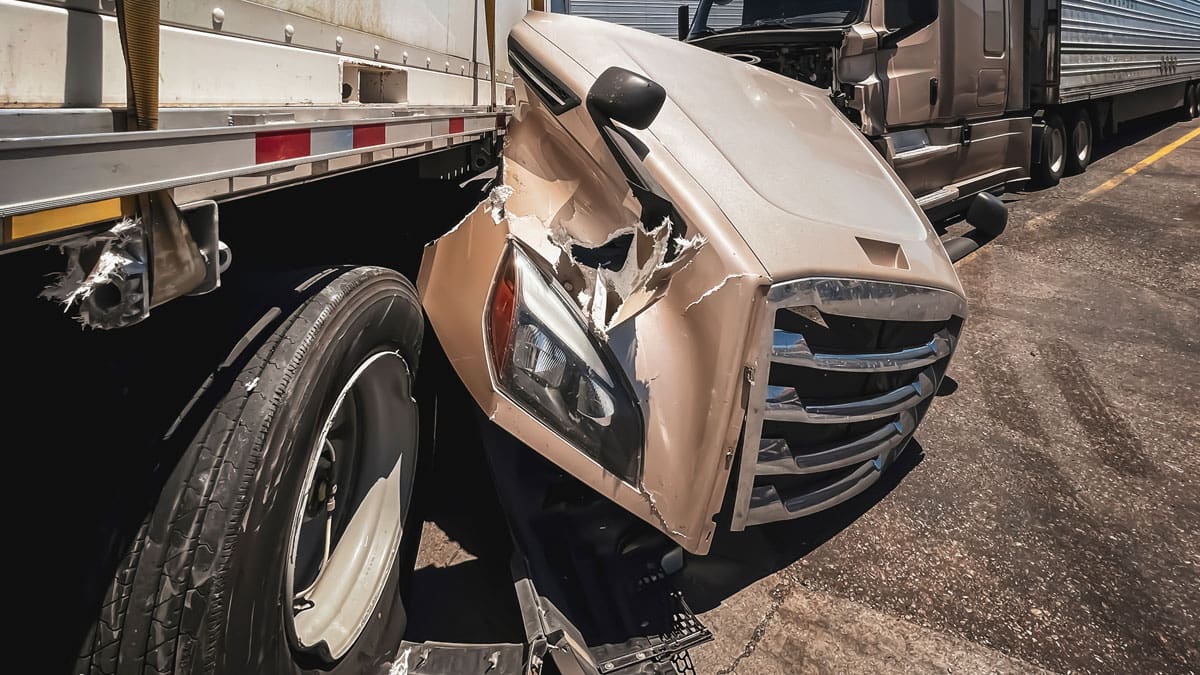
Truck accident claims are governed by a denser layer of law than ordinary car accident cases, and that density works in favor of victims who have the right representation. A commercial truck crash triggers not just Nevada negligence law but federal trucking regulations, and a local attorney’s ability to move quickly within both systems often determines how much compensation a victim ultimately recovers.
Why Local Representation Matters in Nevada
Nevada’s freight traffic is concentrated on a small number of corridors, I-15, U.S. 95, and the I-15/U.S. 95 interchange in Las Vegas, often called the “Spaghetti Bowl.” An attorney who regularly handles cases in Clark County courts understands how local juries, judges, and insurance adjusters typically approach truck litigation, and has existing relationships with the accident reconstructionists, medical providers, and investigators needed to build a case quickly. That speed matters because trucking companies begin building their defense immediately after a crash, often before the injured party has left the hospital.
For a free legal consultation, call (725) 900-9000
Establishing Liability Under Federal and State Law
Nevada formally incorporates the Federal Motor Carrier Safety Regulations (FMCSRs) into state law, giving attorneys a second, independent basis for liability beyond ordinary negligence. The Federal Motor Carrier Safety Administration’s Hours of Service rules limit property-carrying drivers to 11 hours of driving after 10 consecutive hours off duty, within a 14-hour on-duty window, with a hard cap of 60 hours in 7 days or 70 hours in 8 days. A documented violation of these rules is powerful evidence of negligence and can support claims not only against the driver but directly against the trucking company for negligent scheduling or supervision, separate from ordinary vicarious liability for an employee’s conduct. Liability frequently extends beyond the driver to the motor carrier, a maintenance contractor, a cargo-loading company, or even a parts manufacturer, and identifying every liable party is often what separates a modest settlement from full compensation.
Preserving Evidence Before It Disappears
Commercial trucks carry evidence that ordinary vehicles don’t: electronic logging device (ELD) data showing the driver’s actual hours, event data recorder (“black box”) information capturing speed and braking in the seconds before impact, and driver qualification and maintenance files. Much of this data is retained only briefly, and trucking companies have no independent obligation to preserve it absent a formal request. A local attorney’s first move is typically a spoliation letter demanding preservation of this data before it is purged or overwritten.
Click to contact our personal injury lawyers today
Calculating Full Compensation
Nevada law allows recovery of both economic damages and non-economic damages. In practice, the real limit on what a victim can recover is the at-fault carrier’s available insurance coverage, which is why identifying every applicable policy matters. Interstate trucks carrying general freight must maintain at least $750,000 in liability coverage under federal law and many carriers also carry excess or umbrella coverage on top of that primary policy. A thorough investigation identifies every layer of coverage that may apply, since a claim’s value is only as meaningful as the policy behind it. In fatal crashes, Nevada’s wrongful death statute, NRS 41.085, allows both the decedent’s heirs and the estate to pursue separate claims.

Complete a Free Case Evaluation form now
Nevada’s Modified Comparative Negligence Rule
Under NRS 41.141, Nevada follows a modified comparative negligence, or “51% bar,” rule: an injured party can recover damages as long as they are 50% or less at fault, with the award reduced by their percentage of responsibility. A victim found 20% at fault on a $100,000 claim recovers $80,000; a victim found 51% at fault recovers nothing. Because fault allocation is frequently the most contested issue in truck litigation, an attorney’s ability to counter early insurance company fault arguments has a direct, dollar-for-dollar effect on the final recovery.

Acting Within Nevada’s Filing Deadline
Nevada law generally requires a personal injury lawsuit to be filed within two years of the crash date under NRS 11.190, or two years from the date of death in wrongful death cases. Missing the deadline typically bars recovery entirely, regardless of the strength of the underlying claim, which is why early legal involvement is tied so directly to case value rather than simply case eligibility.
No obligation consultations are always free.
Let Us Help You! Call Now: (725) 900-9000 Truck Accident Laws and the Lawsuit Process
A distracted, tired, careless, and impaired truck driver can be a life-changing burden that will result in unforeseen consequences. Van Law has an immediate response team ready to visit the scene an...
 Driver Impairment in Trucking Accidents: A Dangerous Combination
Unfortunately, the abuse of alcohol and hard drugs has been a prevalent issue in the trucking industry for many years. The long, solitary hours and the pressure to log as many miles as possible lead...
 How the Graves Amendment Affects Moving Truck Cases
Every year, thousands and thousands of Americans hit the road in search of new environments and new opportunities. Some may choose to cram their sedans or load their pickups, while others opt for a ...
 The Dangers of Improper Semi-Truck Maintenance
When a heavily-loaded commercial truck collides with a smaller vehicle, serious or fatal injuries are almost inevitable. After a truck accident, you may be quick to pin the blame on driver error, bu...