
Talcum Powder Lawsuit Update (Johnson & Johnson’s Proposed Settlement)
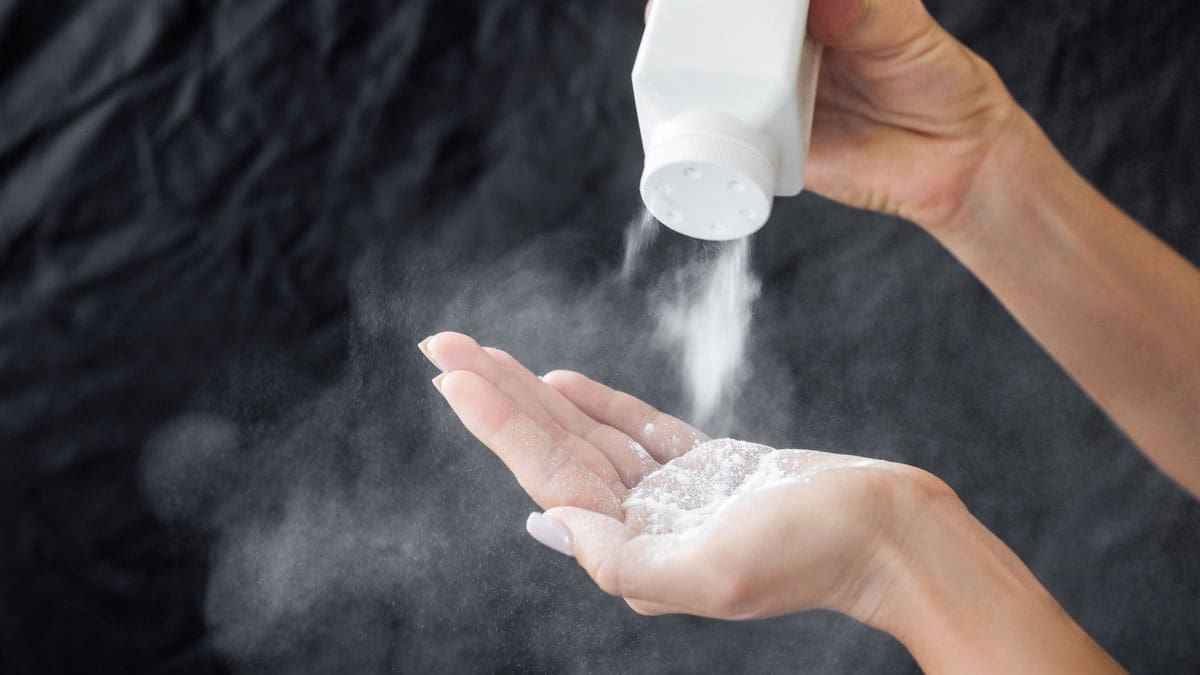
Lawsuits involving Johnson & Johnson’s talcum powder products have become among the largest and most closely watched product liability cases in U.S. history. Plaintiffs allege that prolonged use of these products increased the risk of ovarian cancer.
The litigation has been unfolding for more than a decade. As early as 2016, juries began returning significant verdicts in favor of some plaintiffs, and thousands of federal lawsuits were consolidated into multidistrict litigation (MDL-2738) in the U.S. District Court for the District of New Jersey.
Since then, the parties have spent years litigating scientific evidence, challenging expert testimony, and battling over Johnson & Johnson’s unsuccessful attempts to resolve the claims through bankruptcy.
Now, the litigation may be entering a new phase. In late July 2026, Johnson & Johnson announced a proposed settlement intended to resolve approximately 76,000 remaining ovarian cancer claims. The company continues to deny that its talc-based products caused cancer or contained asbestos, but says the agreement is intended to finally bring this years-long litigation to a close. The proposed settlement, however, is not yet final and will only take effect if at least 95% of eligible claimants agree to participate.
A Brief History of the Talcum Powder Litigation
The lawsuits against Johnson & Johnson primarily allege that long-term use of the company’s talc-based baby powder and other cosmetic talc products increased the risk of ovarian cancer. Plaintiffs claim that Johnson & Johnson knew, or should have known, that its talc products posed serious health risks but failed to adequately warn consumers. The company has consistently denied those allegations, maintaining that decades of scientific testing support the safety of its cosmetic talc products and that its products did not contain asbestos.
As lawsuits multiplied across the country, Johnson & Johnson faced tens of thousands of individual claims in both federal and state courts. The litigation produced hundreds of trials over the years, with mixed results. Some juries awarded plaintiffs substantial damages, including several verdicts reaching into the hundreds of millions.
In one case involving 22 women, a jury returned a verdict for the plaintiffs. However, other juries returned defense verdicts after finding that plaintiffs had not met their burden of proof. Those varying outcomes reflected the complexity of the scientific evidence and the highly individualized nature of many of the claims.
Rather than continuing to defend every case individually, Johnson & Johnson adopted an unprecedented legal strategy commonly referred to as the “Texas Two-Step”. Through a Texas divisional merger, the company transferred its talc-related liabilities into a newly created subsidiary, LTL Management LLC, which then filed for Chapter 11 bankruptcy. Johnson & Johnson argued that bankruptcy would provide a faster, fairer, and more equitable way to compensate current and future claimants through a court-supervised trust while avoiding decades of piecemeal litigation.
Plaintiffs strongly opposed that approach, arguing that LTL was not in genuine financial distress because it was backed by one of the world’s largest and most profitable healthcare companies. In 2023, the U.S. Court of Appeals for the Third Circuit agreed, dismissing LTL’s bankruptcy after concluding that the subsidiary was not eligible for Chapter 11 protection under the circumstances. Johnson & Johnson later pursued a second bankruptcy strategy through another affiliate, but those efforts also failed to achieve a global resolution of the litigation.
With the bankruptcy avenue effectively closed, the parties returned to traditional litigation. Discovery continued, expert witnesses were challenged, bellwether proceedings moved forward, and courts increasingly focused on the scientific evidence supporting individual claims.
By mid-2026, after years of procedural battles and unsuccessful attempts to resolve the litigation through bankruptcy, both sides found themselves negotiating what has become Johnson & Johnson’s largest proposed talcum powder settlement to date.
For a free legal consultation, call (725) 900-9000
What’s Changed in the Talcum Powder Litigation?
For much of the past decade, talcum powder litigation has been defined by courtroom battles, scientific disputes, and repeated efforts to determine whether the claims should proceed to trial. The biggest development of 2026, however, came from a series of federal court rulings followed almost immediately by Johnson & Johnson’s announcement that it had reached a proposed settlement with attorneys representing thousands of plaintiffs.
The Court Raised New Questions About Scientific Evidence
One of the most significant developments occurred in July 2026, when U.S. District Judge Rukhsanah Singh, who oversees the federal talcum powder multidistrict litigation (MDL), issued rulings addressing one of the most difficult issues in any toxic exposure case: specific causation.
In product liability litigation, plaintiffs generally must prove two separate issues. First, they must show that a product is capable of causing a particular disease in the general population, often referred to as general causation. Second, they must establish that the product more likely than not caused their own illness, a requirement known as specific causation.
Judge Singh concluded that the plaintiffs’ expert evidence raised serious questions on that second issue. During pretrial proceedings, several experts were unable to identify a reliable scientific method for determining whether talcum powder, rather than other known risk factors, caused an individual plaintiff’s ovarian cancer. As a result, the court ordered plaintiffs to show why thousands of pending cases should not be dismissed if they could not present admissible evidence of specific causation.
Importantly, the court did not dismiss the lawsuits outright. Instead, it required plaintiffs to demonstrate that their claims could satisfy the evidentiary standards required for trial.
The ruling represented one of the most consequential procedural developments in the litigation to date. Rather than addressing whether Johnson & Johnson’s products were generally capable of causing cancer, the court focused on whether individual plaintiffs could meet the legal burden of proving that the products caused their own injuries. That distinction is often critical in complex product liability litigation and can determine whether a case ultimately reaches a jury.
Johnson & Johnson Announces a Proposed Settlement
Less than a week after those rulings, Johnson & Johnson announced that it had reached a proposed settlement with attorneys representing approximately 76,000 ovarian cancer claimants. According to the company, the agreement would resolve nearly all remaining ovarian cancer claims pending in the federal MDL and related state court proceedings, provided that at least 95% of eligible claimants choose to participate.
Unlike the company’s previous attempts to resolve the litigation through bankruptcy proceedings, this proposal is a voluntary settlement agreement. Earlier plans sought to channel the claims into bankruptcy through newly created subsidiaries, an approach that was ultimately rejected by the courts. The new proposal instead relies on voluntary participation by existing claimants and does not require the bankruptcy process that had stalled the litigation for several years.
Johnson & Johnson continues to deny that its talc-based products caused ovarian cancer or has emphasized that the settlement does not constitute an admission of liability. Company representatives have stated that they remain confident in the scientific evidence supporting their products but believe resolving the remaining litigation will allow the company to move forward after years of costly legal disputes.
The plaintiffs’ leadership, meanwhile, has described the proposed agreement as an opportunity to provide compensation to thousands of women who have waited years for their claims to be resolved.
Is the Settlement Final?
No, the proposed settlement is not the end of the lawsuits yet. Although the announcement represents the most significant development in the litigation in years, the settlement will only become effective if the required participation threshold is met. If enough eligible claimants agree to participate, Johnson & Johnson expects to begin making payments as early as 2027, with additional payments scheduled in subsequent years.
If the participation requirement is not satisfied, the agreement could fail, leaving the remaining lawsuits to continue through the court system.
For plaintiffs who already have pending claims, the coming months are likely to focus on evaluating the proposed settlement and deciding whether participation is in their best interests. For individuals who have not yet filed a claim, the announcement does not necessarily eliminate their legal options, as eligibility may depend on the timing of their diagnosis, the facts of their case, and how the settlement is ultimately implemented.
Johnson & Johnson Proposed Settlement and What it Means for Current and Future Claimants
Although Johnson & Johnson’s proposed settlement marks one of the most significant developments in the talcum powder litigation, it does not automatically resolve every claim or end the lawsuits overnight.
For individuals who already have pending ovarian cancer claims, the next step will likely involve reviewing the proposed settlement with their attorney. If the required participation threshold is met and the settlement receives final approval, eligible claimants will have the opportunity to decide whether to participate under the terms of the agreement. That decision should take into account the strength of the individual claim, the potential value of continued litigation, and the certainty that a negotiated resolution may provide.
For those who have not yet filed a lawsuit, the announcement does not necessarily mean it is too late to pursue legal action. Eligibility may depend on several factors, including the type of diagnosis, the length and manner of talcum powder use, when the diagnosis occurred, and the statute of limitations in the applicable state. The settlement process itself may also affect how future claims are handled, making early legal advice especially important.
As with many large multidistrict litigations, no two cases are exactly alike. A diagnosis of ovarian cancer alone does not automatically establish a legal claim, just as the existence of a proposed settlement does not guarantee compensation. Every case must still be evaluated on its own facts, medical history, and available evidence.
If you believe you developed ovarian cancer after long-term use of Johnson & Johnson talcum powder products, consulting an experienced personal injury lawyer can help you take the first steps towards getting justice. In particular, you’ll need to collect and preserve medical records, pathology reports, treatment records, and any information regarding your history of product use, which can be valuable when evaluating your legal options.
Click to contact our personal injury lawyers today
How Van Law Firm Can Help
The talcum powder litigation has evolved far beyond a series of individual product liability lawsuits. It now involves complex questions of medical science, toxicology, epidemiology, bankruptcy law, multidistrict litigation procedure, and settlement administration. Understanding how those issues affect an individual claim often requires experienced legal guidance.
At Van Law Firm, our attorneys have extensive experience representing individuals injured by defective products. We understand that behind every mass tort is a person or family dealing with a serious medical diagnosis, mounting expenses, and uncertainty about what comes next. Our role is to help clients understand their rights, evaluate the strength of their claims, and guide them through every stage of the legal process.
If you believe you may qualify to participate in the ongoing talcum powder litigation, our legal team can review your circumstances, answer your questions, and explain how the proposed settlement may affect your options. Every consultation is confidential, and every case receives an individualized evaluation based on its specific facts.
To learn more about your legal rights, contact Van Law Firm today for a free, no-obligation case evaluation. Our attorneys are here to help you understand your options and determine the best path forward for you and your family.
No obligation consultations are always free.
Let Us Help You! Call Now: (725) 900-9000 RECOVERING COMPENSATION FOR PLUMBING DEFECTS
Often times construction defects, like a plumbing problem, are not readily apparent. In fact, a construction defect can exist for a long period of time before it is discovered and, all the while, i...
 How to Recover Compensation for Foundation Defects
The foundation of a home supports the entire structure so it is incredibly important that it be free from construction defects. Foundation defects can manifest as floor cracking, stucco cracks, dryw...
 HOW TO RECOVER COMPENSATION FOR ROOFING AND STUCCO DEFECTS
Roofing defects and other defects with a home’s exterior can cause serious damage to a property. A roof defect can allow water to penetrate your home, resulting in water damage to framing, drywall, ...
 What to Do When a Construction Defect Causes Water Damage
Water damage is one of the most common types of construction defects, and it can result in significant damage to your home. Not only is it an expensive hassle, but it can also result in other proble...