
What to Know About Your Insurance After a Car Accident
Legally reviewed by Sandy Van (Bar No. 10785). Updated October 2026.

Nevada is an at-fault state, which means the insurance company for the driver who caused the crash is generally responsible for the resulting damages. But that fact is only the starting point. Several types of coverage can apply to a single accident, insurance companies operate under specific legal duties when handling a claim, and strict deadlines govern how long you have to act. Understanding how these pieces fit together often makes the difference between a fair settlement and a frustrating fight.
Is Nevada an At-Fault or No-Fault State?
Nevada operates under a fault-based system. Unlike no-fault states, where each driver’s own insurer pays for injuries regardless of who caused the crash, Nevada requires the at-fault driver’s liability insurance to cover the other party’s losses. Every registered vehicle must carry minimum liability coverage of $25,000 for bodily injury or death per person and $50,000 per accident, under NRS 485.185. These are legal minimums, not a guarantee of adequate coverage. A large share of at-fault drivers carry no more than the state minimum, and that amount is often not enough to cover a serious injury.

For a free legal consultation, call (725) 900-9000
What Types of Insurance Coverage Come Into Play?
A single accident can trigger more than one type of coverage at the same time:
- Liability coverage (the at-fault driver’s policy) pays at the end for third parties’ medical bills, lost wages, and pain and suffering, up to the policy limits.
- Collision coverage, if the driver carries it, pays to repair or replace their own vehicle regardless of fault, minus whatever deductible the policy carries.
- Medical payments (MedPay) coverage, an optional add-on in Nevada, can pay medical bills for the policyholder and passengers up to the policy limit.
- Uninsured/underinsured motorist (UM/UIM) coverage steps in when the at-fault driver has no insurance, or not enough of it, to cover the full loss up to the policy limit.
Each of these interacts differently with a personal injury claim, and which one a person pursues first can affect both how quickly they’re paid and how much they ultimately recover.

How Does Fault Affect What Insurance Pays?
Nevada follows a modified comparative negligence rule under NRS 41.141. A person who shares some responsibility for the accident has their compensation reduced by their percentage of fault. If their fault is greater than 50%, they’re barred from recovering anything at all. Insurance adjusters know this rule well and sometimes use it strategically, assigning a claimant partial fault early in the process to justify a lower offer before all the evidence has been gathered.
Click to contact our personal injury lawyers today
What Happens When a Claim Is Filed?
After an accident is reported, the insurer assigns a claims adjuster to investigate. This typically involves reviewing the police report, inspecting vehicle damage, and often requesting a recorded statement. Recorded statements deserve caution: they’re taken for the insurance company’s benefit, not the claimant’s, and are frequently used later to minimize a payout. Claimants generally aren’t obligated to provide one to the other driver’s insurer, though their own policy may require cooperation with their own insurer’s investigation. Thorough records, medical bills, repair estimates, wage-loss documentation, and copies of correspondence, strengthen a claimant’s position throughout the process.

Complete a Free Case Evaluation form now
How Long Is There to File a Claim or Lawsuit?
Reporting an accident to one’s own insurer should happen quickly. Most policies require “prompt” notice, and delay can jeopardize coverage. But the deadline that matters most legally is the statute of limitations: under NRS 11.190, a person generally has two years from the date of the accident to file a personal injury lawsuit in Nevada. Settlement negotiations with an insurance company do not pause this clock, and missing it typically forecloses the right to sue, regardless of how the insurance claim itself is progressing.
When Should Someone Talk to an Attorney?
Because multiple coverages, a comparative fault analysis, and specific statutory duties are often in play at the same time, even a claim that looks straightforward can involve more moving parts than it first appears. An attorney can identify which coverages apply, push back on premature fault assignments, and hold an insurer to its statutory obligations.
No obligation consultations are always free.
Let Us Help You! Call Now: (725) 900-9000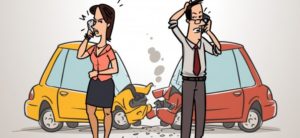 DEALING WITH INSURANCE COMPANIES IN A PERSONAL INJURY ACCIDENT
Dealing with insurance companies can be the most frustrating part of handling a personal injury claim. Whether your claim comes from a car accident, medical malpractice, workman’s comp, or dog bite ...
 FRIENDS DON’T LET FRIENDS TEXT AND DRIVE
Texting and hand-held cell phone use is illegal in Nevada.The National Highway Traffic Safety Administration (NHTSA) reported that in 2014, distracted drivers caused thousands of accidents across th...
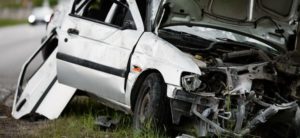 “MINOR” CAR ACCIDENTS ARE SERIOUS
“Minor” car accidents, perhaps caused by inattention or carelessness, can still cause a great deal of pain and suffering. According to the National Highway Traffic Administration, over 2 million peo...
 LAS VEGAS RANKS LOW FOR DRIVER SAFETY
Recently, Las Vegas ranked 144 out of 200 cities in the United States for driver safety. The recent report reveals that drivers in Las Vegas have a car accident every eight years and are an astoundi...