
What to Do After a Serious Crash With a Company Fleet Vehicle
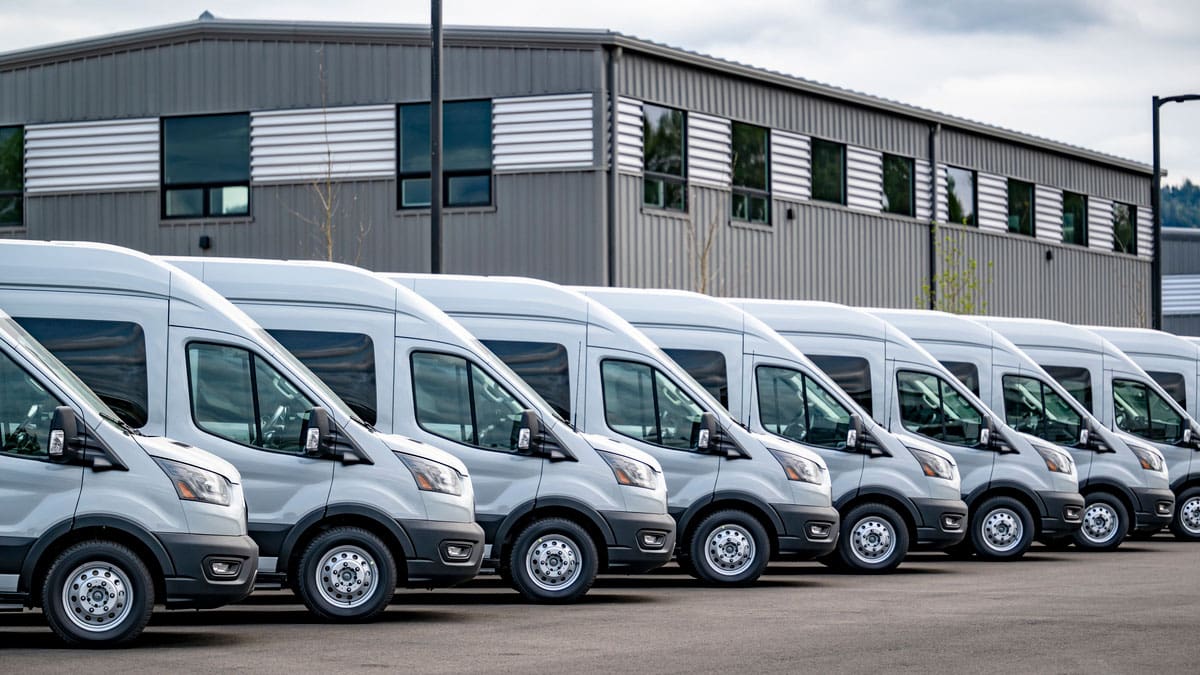
Company fleet vehicles occupy a distinct place on Nevada roads. Sales representatives, service technicians, utility workers, corporate employees, and construction supervisors all use vehicles owned by their employers to perform work throughout the state. When one of these vehicles causes a serious crash, the situation combines the practical concerns of any car accident with a set of legal considerations tied to the employer-employee relationship and the corporate resources behind the driver.
The steps taken in the hours and days after a crash with a company fleet vehicle can determine both the medical outcome and the strength of any resulting claim. Understanding what to do at the scene, how to identify the employer, and how Nevada law treats these cases is essential for anyone involved in one of these incidents.
What Counts as a Company Fleet Vehicle
A fleet vehicle is any vehicle owned or leased by a business and used by employees to perform work-related tasks. Common examples include:
- Sales representative cars used to visit clients and prospects
- Service and technician vehicles for plumbers, electricians, HVAC contractors, and cable installers
- Utility company trucks used for maintenance and repair calls
- Corporate cars provided to executives and managers
- Pickup trucks and vans used by construction supervisors and site managers
- Landscaping and pest control vehicles
- Delivery vehicles operated by non-consumer commercial services
Fleet vehicles typically carry commercial insurance policies, display company markings, and follow employer-specified maintenance schedules. When one is involved in a crash, the vehicle itself often provides visible clues about the employer.
For a free legal consultation, call (725) 900-9000
Immediate Steps at the Scene
The steps taken in the first minutes after a crash with a fleet vehicle set the foundation for both immediate safety and any legal claim. Injured parties should:
- Call 911 to request emergency medical response and police presence
- Accept emergency medical evaluation, even when injuries appear minor
- Photograph the fleet vehicle, including any company logos, markings, DOT numbers, and license plates
- Obtain the driver’s name, license, insurance information, and employer identification
- Ask the driver directly what company they work for and whether they were on duty
- Identify witnesses and collect their contact information before they leave
- Request a copy of the police report and confirm it includes the employer information
The driver’s status at the moment of the crash matters enormously for the case. A driver on the clock and performing employer-directed work triggers a different legal analysis than a driver using the vehicle for personal errands during off hours.
Getting Employer Information
Employer identification is one of the most important early tasks after a fleet vehicle crash. Sources of employer information include:
- Company logos and markings on the vehicle itself
- The driver’s uniform, name badge, or identification
- Business cards the driver may have carried
- Vehicle registration if listed on the police report
- License plate lookup through law enforcement
- Insurance card provided at the scene
- DOT and MC numbers displayed on commercial vehicles
Some drivers may be reluctant to identify their employer, particularly if company policy requires notification through specific channels. An experienced attorney can help establish employer identification through discovery and public records even when the driver was uncooperative at the scene.
Click to contact our personal injury lawyers today
Nevada Employer Liability for Fleet Vehicle Crashes
Nevada employers are generally responsible for the actions of their employees when those actions occur within the scope of employment. This principle, known as respondeat superior, a Latin term meaning “let the superior answer,” applies broadly to fleet vehicle situations. When an employee driving a company vehicle causes a crash while performing work tasks, the employer can typically be held financially responsible along with the driver.
To establish employer liability, an injured party generally must show:
- The driver was an employee, not an independent contractor
- The driver was performing tasks within the scope of employment
- The vehicle was owned or provided by the employer
- The employer had authority over how the work was performed
Employers frequently try to distance themselves from a crash by arguing that the employee was off the clock, on a personal errand, or acting outside the scope of employment. These defenses can sometimes succeed, but they are also often overstated. A driver making a quick personal stop between service calls, or briefly deviating from the assigned route, may still be within the scope of employment for legal purposes.
Complete a Free Case Evaluation form now
Insurance Considerations in Fleet Cases
Fleet vehicle crashes typically involve commercial insurance policies with substantially higher limits than personal auto insurance. Coverage sources may include:
- The employer’s commercial auto liability policy
- The employer’s commercial general liability policy
- The employer’s umbrella policy for damages exceeding primary coverage
- The at-fault driver’s personal auto policy in some circumstances
- Uninsured or underinsured motorist coverage on the injured party’s own policy
- Health insurance for medical treatment, subject to subrogation
Commercial policies often include large primary limits and layered excess coverage. Serious injuries in fleet vehicle cases are less likely to be capped by insurance than in typical passenger vehicle crashes. Identifying every applicable policy is essential for maximizing recovery.
Preserving Evidence Specific to Fleet Vehicles
Fleet vehicle crashes involve categories of evidence that do not exist in typical car accident cases. Time-sensitive sources include:
- Vehicle GPS and telematics data showing location, speed, and route history
- Maintenance and inspection records from the employer’s fleet management system
- Driver qualification files and training records
- Dashcam footage from the fleet vehicle
- Dispatch logs showing the driver’s assigned tasks at the time of the crash
- Prior incident reports involving the same driver
- Company policies on driver conduct, phone use, and rest breaks
Much of this evidence is controlled by the employer and can be modified, overwritten, or deleted within days or weeks of a crash. A prompt evidence preservation letter from an attorney can help ensure these records remain intact through the investigation.
Statute of Limitations in Nevada
Nevada law sets strict deadlines for filing personal injury claims. Under the state’s two-year statute of limitations, an injured driver generally has two years from the date of the crash to file a lawsuit.
Cases involving federal government fleet operations may involve additional procedural requirements, including administrative claims under the Federal Tort Claims Act. Missing the applicable deadline can permanently bar recovery, regardless of how strong the underlying case may be.
How Van Law Firm Can Help
Van Law Firm represents people injured by drivers operating company fleet vehicles throughout Nevada. The firm has handled cases involving sales representative vehicles, service and utility trucks, corporate cars, and other employer-owned vehicles. Our attorneys understand the layered insurance structures, the employment-scope analysis, and the corporate defense tactics that appear in these cases, and we work with accident reconstructionists and medical specialists to build strong claims against every responsible party.
Van Law Firm serves clients throughout Nevada, including Las Vegas, Henderson, Reno, and surrounding communities.
No Fees Unless You Win
Van Law Firm handles personal injury cases on a contingency fee basis. This means:
- There are no upfront costs to begin your case
- You pay no hourly fees during the representation
- Legal fees are only collected if compensation is recovered
- Consultations are free and confidential
Contact Van Law Firm Today
If you or someone close to you has been injured in a crash with a company fleet vehicle in Nevada, Van Law Firm is ready to evaluate the case and identify every party whose negligence may have contributed. Free consultations help injured people understand their legal options under Nevada law.
No obligation consultations are always free.
Let Us Help You! Call Now: (725) 900-9000 DEALING WITH INSURANCE COMPANIES IN A PERSONAL INJURY ACCIDENT
Dealing with insurance companies can be the most frustrating part of handling a personal injury claim. Whether your claim comes from a car accident, medical malpractice, workman’s comp, or dog bite ...
 FRIENDS DON’T LET FRIENDS TEXT AND DRIVE
Texting and hand-held cell phone use is illegal in Nevada.The National Highway Traffic Safety Administration (NHTSA) reported that in 2014, distracted drivers caused thousands of accidents across th...
 “MINOR” CAR ACCIDENTS ARE SERIOUS
“Minor” car accidents, perhaps caused by inattention or carelessness, can still cause a great deal of pain and suffering. According to the National Highway Traffic Administration, over 2 million peo...
 LAS VEGAS RANKS LOW FOR DRIVER SAFETY
Recently, Las Vegas ranked 144 out of 200 cities in the United States for driver safety. The recent report reveals that drivers in Las Vegas have a car accident every eight years and are an astoundi...