









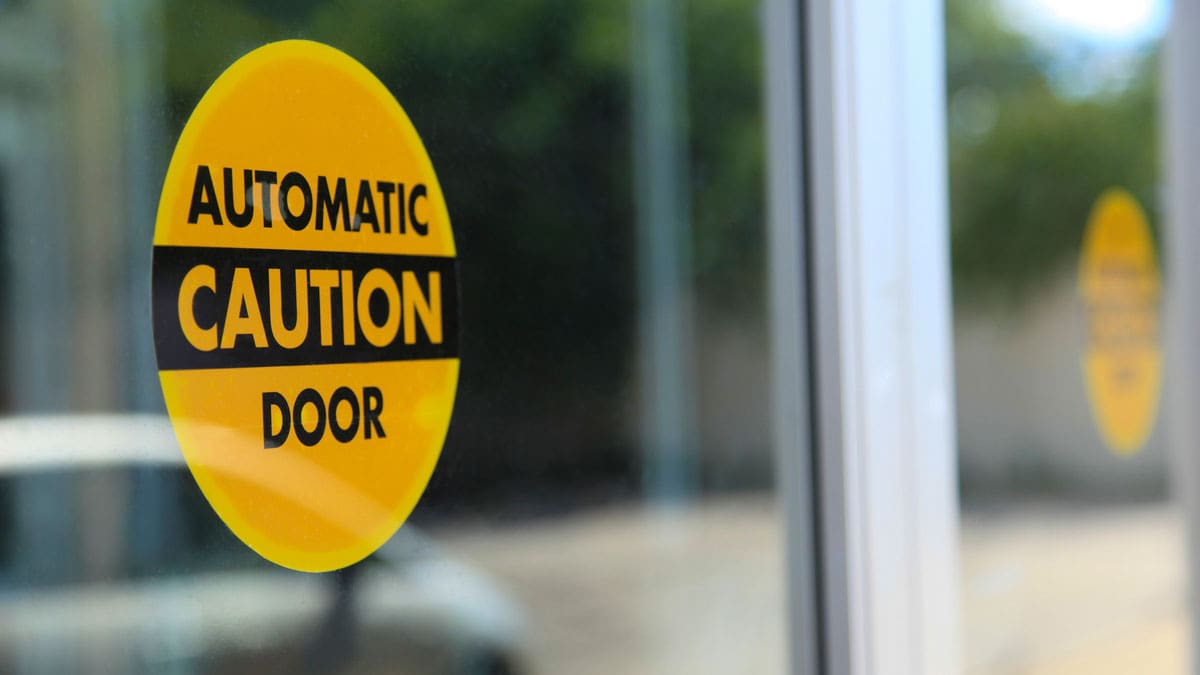
If an automatic door closed on you, struck you, or failed to detect you in Lakewood, contact Van Law Firm for a free case review. Automatic door injury cases turn on maintenance and inspection records that the property owner controls, and most of that evidence, especially surveillance footage, is gone within days unless a preservation request goes out right away. The sooner we’re involved, the more there is left to work with.
Our Washington office is at 9311 Bridgeport Way SW in Lakewood, and we serve clients throughout Pierce County and the surrounding area, including Tacoma. Automatic door claims are premises liability claims, and the door itself is usually still in service afterwards, which means the evidence changes unless it is preserved early.
- Incidents we handle: sliding doors closing on a person, swing doors striking someone, sensor failures, doors closing too quickly or with excessive force, and entrapment against a frame or guide rail.
- Where they happen: supermarkets, big-box and retail stores, medical buildings, hotels, offices, transit stations, and parking structures.
- Fees: Our personal injury law firm never charges upfront fees. We handle your case on a contingency, which means you don’t pay unless we win.
- Our Washington office: 9311 Bridgeport Way SW, Lakewood, WA 98499. Phone (360) 200-0000.
How Automatic Door Injuries Happen
Automatic doors are safety devices as much as conveniences. They rely on sensors to detect people, and on the door itself to move at a controlled speed and stop when it meets resistance. When any part of that fails, the door becomes a moving obstacle that a person has no reason to expect.
- Sensor failure. A motion or presence sensor that no longer detects someone standing in the doorway, so the door closes on them.
- Misaligned or dirty sensors. Sensors knocked out of alignment or obscured by dirt, condensation, or seasonal displays.
- Doors closing too fast or with too much force. Timing and force settings that drift over time and are never rechecked.
- Failure to reverse on contact. A door that should stop and reopen when it meets resistance and instead continues closing.
- Entrapment. A person or a limb caught between the door and the frame, jamb, or guide rail.
- Mechanical failure. Doors coming off tracks, glass panels breaking, or hardware failing under load.
- Missing signage or guide rails. Components required by the applicable standards that were removed during a refit and never replaced.
These failures develop gradually. A door that has been closing slightly too fast for months is a maintenance problem long before it becomes an injury, and that history is usually recorded somewhere.
What Washington Premises Liability Requires
A business open to the public owes its customers a duty of reasonable care. In Washington, that duty goes further than simply fixing hazards someone reports: a property owner is expected to inspect for dangerous conditions and discover them, rather than waiting to be told.
A claim generally requires showing that a dangerous condition existed, that the owner knew about it or should have known through reasonable inspection, that it failed to fix or warn about it, and that the condition caused your injury. The second element is where automatic door cases are usually won or lost, and it is why maintenance and inspection records matter more than anything else in the file.
Washington applies pure comparative fault under RCW 4.22.005. If the other side argues you were partly responsible, for example by standing in the doorway or by not looking where you were going, your recovery is reduced by your share of fault rather than eliminated by it.
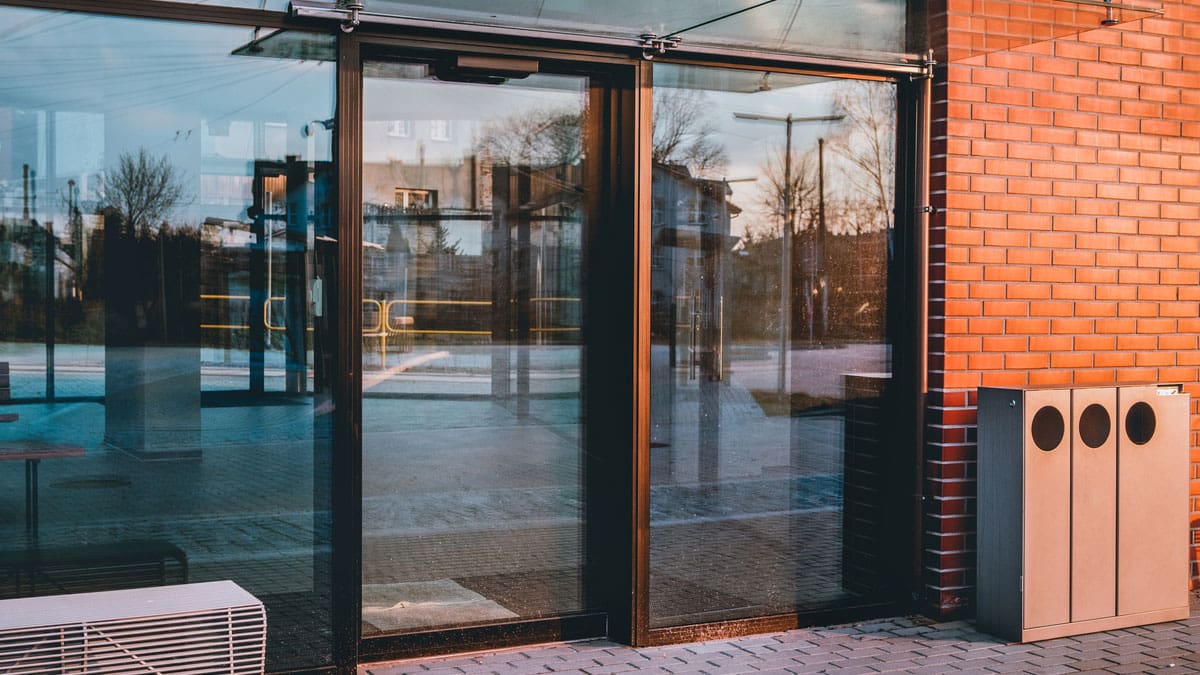
The Standards Automatic Doors Are Meant to Meet
Automatic doors are governed by a set of industry standards that most people, including many property managers, have never heard of. They are not statutes, but they matter a great deal in a negligence case because they define what careful operation looks like.
- ANSI/BHMA A156.10 covers power operated pedestrian doors, which open automatically when someone approaches.
- ANSI/BHMA A156.19 covers power assist and low energy operated doors, the slower type commonly fitted with a push plate.
- ANSI/BHMA A156.27 covers automatic revolving doors.
These standards set requirements for sensing devices, signage, and safe operation. The American Association of Automatic Door Manufacturers trains and certifies inspectors, and the industry expectation is an annual inspection by a certified inspector alongside daily checks carried out by the owner or the person responsible for the equipment.
The daily safety check
The recommended daily check is short and specific. It verifies that the activating and safety sensors or mats are working, that the doors open and close without impact, that the doors, threshold, and guide rails are intact and properly secured, that the required safety signage is present, and that the area is clear of obstacles that could interfere with the doors.
That checklist is useful in two directions. Where a business carried it out and logged it, the log shows when a fault first appeared. Where it did not, the absence of any inspection record is itself evidence about how the property was managed.
Who May Be Responsible
More than one party is usually involved, and each may carry separate insurance.
- The property owner. Responsible for the safe condition of the premises, including entrances, and for arranging inspection and maintenance.
- The business operating the premises. A tenant retailer is often responsible for daily checks and for reporting faults even where the landlord owns the building.
- The maintenance or service company. Where a servicing contract existed, the contractor may be responsible for a fault it should have found, or for one it found and did not correct.
- The installer. Where the door was set up incorrectly, or components required by the applicable standard were never fitted.
The manufacturer. Where the door or a sensor was defective in design or construction, or sold without adequate warnings. Washington sets out manufacturer liability by statute in RCW 7.72.030.
- A public entity. Where the door is at a transit station, library, or other public building. These claims carry additional notice requirements.
Evidence: Records, Footage, and the Door Itself
Automatic door cases are proved with documents the other side holds, which is why the first step is a written request that they be preserved.
- Surveillance footage. Almost every location with automatic doors has a camera pointed at them. Most systems overwrite within days, and the footage shows the door’s behaviour immediately before and during the incident. This is the single most important piece of evidence and the one most likely to disappear.
- Maintenance and service logs. Every service visit, callout, and repair, showing whether the fault had been reported before.
- Annual inspection reports. Whether an inspection was carried out, when, by whom, and what it found.
- The inspection decal on the door. Inspected doors usually carry a dated decal. Its presence, absence, or date is a quick indicator of how the door was maintained.
- Prior incident and complaint records. Earlier reports about the same door, from customers or staff, establish notice directly.
- The incident report. Ask for a copy at the time. Businesses complete one and frequently do not provide it unless asked.
- Sensor and control settings. Where a specialist examines the door, current timing, force, and sensing settings can be compared against the applicable standard.
A preservation letter sent within days is what secures most of this. Without one, footage is overwritten on schedule and a faulty door is quietly serviced, taking the physical evidence with it.
What to Do After an Automatic Door Injury in Lakewood
- Get medical attention, even if it seems minor. Head, shoulder, and wrist injuries from door impacts are commonly underestimated in the first hours.
- Report it to the business before you leave. Ask that an incident report be completed and request a copy.
- Photograph the door and the area. The full doorway, the sensors above and beside it, any decal on the glass, the signage, and anything obstructing the sensors.
- Note the door’s behaviour. Whether it closed without reopening, how fast it moved, whether anyone said it had been playing up. Write it down the same day.
- Get witness details. Staff and other customers frequently know the door had been faulty.
- Do not give a recorded statement to an insurer. Not before the extent of the injury is known and the records have been obtained.
Common Injuries and Medical Documentation
- Head injuries and concussion, particularly from swing doors and from falls caused by the impact.
- Shoulder, arm, and wrist injuries, including rotator cuff tears and fractures from being struck or from bracing against a closing door.
- Crush and entrapment injuries to hands and fingers.
- Fractures and soft tissue injuries from falls, which are frequently more serious for older adults.
- Lacerations from broken glass panels.
Documentation matters because these injuries are routinely characterised as minor. Attend the initial appointment, follow through on referrals, and make sure the mechanism is recorded accurately in the notes. A record that says a door struck you is more useful later than one that says you fell.
Damages and Filing Deadlines
- Economic losses: emergency and ongoing treatment, imaging, physical therapy, surgery where required, medication, and lost income.
- Non-economic losses: pain, reduced function, and the effect on daily activities.
What any individual claim is worth depends entirely on its facts, so no one can responsibly quote a figure before reviewing the medical records.
Washington deadlines
- Most claims: three years from the date of injury under RCW 4.16.080(2).
- Injured children: RCW 4.16.190 tolls the period while the injured person is under 18.
- Claims involving a defective door or sensor: product claims run three years from when the harm and its cause were discovered under RCW 7.72.060, subject to that section’s useful safe life provisions.
- Claims against a public entity: a claim must be filed and a waiting period observed before suit. For claims against the state, RCW 4.92.100 sets out the requirement, and local government bodies have their own procedures. These deadlines are far shorter than three years.
Lakewood and Pierce County claims are commonly filed in Pierce County Superior Court, though venue depends on where the incident occurred and which parties are named.
Frequently Asked Questions
Who is liable for an automatic door injury?
Usually the property owner or the business operating the premises, because both owe a duty of reasonable care to customers. Responsibility can also extend to the maintenance company under a service contract, the installer, or the manufacturer where the door or a sensor was defective. Several parties are often named, each with separate insurance.
Can I sue a store for a malfunctioning automatic door?
Yes, where the store knew about the problem or should have found it through reasonable inspection. Washington expects a business open to the public to look for dangerous conditions rather than wait to be told about them. Maintenance logs, inspection records, and prior complaints about the same door are what establish that.
Are property owners required to inspect and maintain automatic doors?
The industry standards are not statutes, but Washington law requires reasonable care, and the standards define what that looks like. The recognised expectation is an annual inspection by a certified inspector alongside daily checks by the owner or operator. A business that did neither has difficulty arguing it took reasonable care.
What automatic-door defects commonly cause injuries?
Sensor failures where the door no longer detects someone in the doorway, sensors knocked out of alignment or obscured, doors closing too quickly or with excessive force, failure to reverse when the door meets resistance, entrapment against a frame or guide rail, and missing signage or guide rails removed during a refit and never replaced.
How can surveillance footage and maintenance logs be preserved?
Through a written preservation letter sent to the business and property owner as soon as possible. Most camera systems overwrite within days, so a verbal request at the scene is rarely enough. The letter should cover footage, service and callout records, inspection reports, and prior complaints about the same door.
Do safety-code or inspection violations help prove negligence?
Yes, considerably. The ANSI/BHMA standards for power operated pedestrian doors set requirements for sensing, signage, and safe operation, and a door falling short of them is strong evidence that reasonable care was not taken. The absence of any inspection record is also evidence, because it shows the recognised practice was not followed.
What if the property owner blames the injured person?
That argument reduces a claim rather than ending it. Washington applies pure comparative fault under RCW 4.22.005, so if you are found partly responsible your recovery is reduced by that percentage and no more. A door that fails to detect a person standing in a doorway is doing precisely what it is designed not to do.
What should I do immediately after an automatic-door accident in Lakewood?
Get medical attention the same day, report the incident to the business and ask for a copy of the incident report, and photograph the doorway, the sensors, any inspection decal, and the signage. Collect witness details, since staff often know the door had been faulty, and write down what the door did while it is fresh.
Client Testimonials
Related Videos