









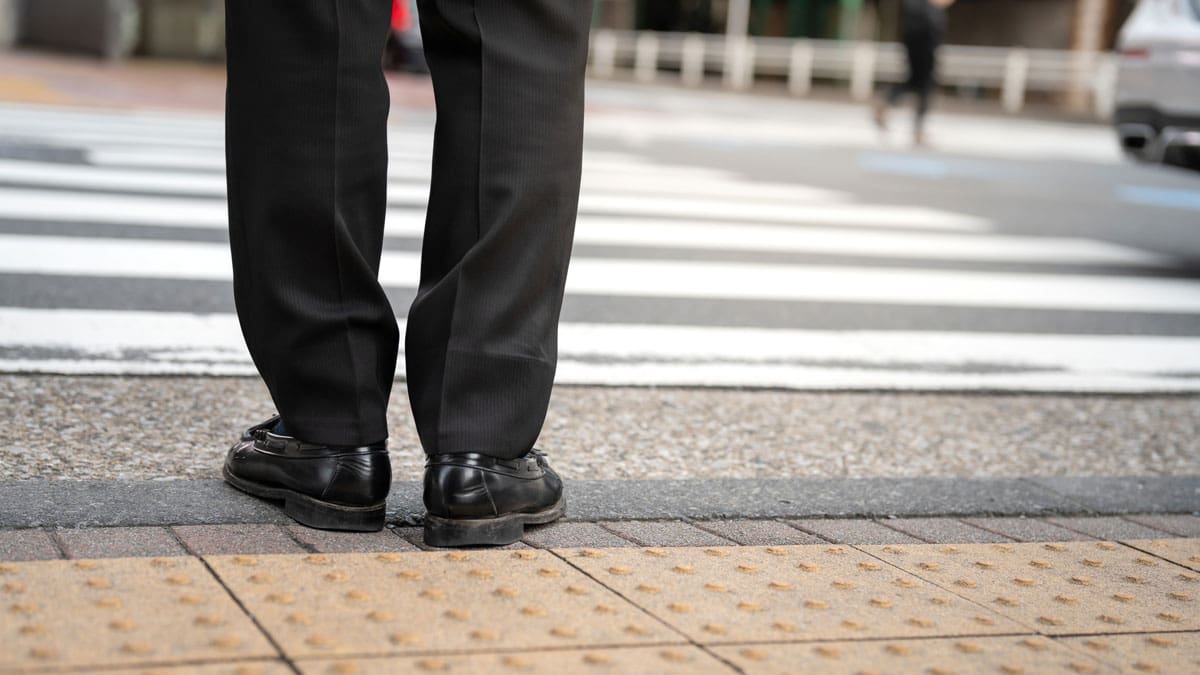
If you were hit by a vehicle while walking in Nevada, Washington, or California, a pedestrian accident lawyer at Van Law Firm can establish how the collision happened, deal with the insurers, and pursue the cost of your treatment and lost income. Being outside a crosswalk does not end your claim.
We represent injured pedestrians in Las Vegas, Henderson, and Summerlin, across Washington from our Lakewood office including Seattle and Tacoma, and in California from Monterey Park. Because pedestrian collisions leave little vehicle damage to inspect, the case usually rests on scene evidence and camera footage that disappears quickly.
- Cases we handle: crosswalk and intersection collisions, distracted and impaired drivers, hit-and-run, parking lot and driveway incidents, and crashes involving delivery and rideshare vehicles.
- What we pursue: emergency and ongoing treatment, rehabilitation, lost income and earning capacity, and the lasting effects of a serious injury.
- Fees: Our personal injury law firm never charges upfront fees. We handle your case on a contingency, which means you don’t pay unless we win.
- Where we work: offices in Las Vegas, Nevada, Lakewood, Washington, and Monterey Park, California.
What to Do After Being Hit by a Vehicle
Your health comes first, and everything else on this list is secondary to it. If you are reading this days or weeks later, the steps still help.
- Get medical attention, even if you feel able to walk away. Adrenaline hides injuries, and a gap between the collision and your first medical visit is the argument insurers use most often.
- Call the police and make sure a report is taken. A report fixes the location, the time, and the driver’s identity while the details are fresh.
- Photograph the scene before anything moves. The crosswalk, the signals, the vehicle’s resting position, skid marks, your injuries, and what you were wearing.
- Get names and numbers for witnesses. Independent witnesses matter more in pedestrian cases than in almost any other type of collision, because there is rarely physical evidence to reconstruct.
- Note nearby cameras. Businesses, traffic signals, doorbells, and buses all record, and most overwrite within days.
- Do not give a recorded statement to the driver’s insurer. Describing the incident before you know the extent of your injuries tends to lock in an understatement.
How Fault Is Determined in a Pedestrian Accident
Fault turns on who had the right of way and whether each person acted with reasonable care. All three states impose duties on drivers and on pedestrians, and a violation by either side is evidence of negligence rather than an automatic answer.
Nevada
Under NRS 484B.283, a driver must yield to a pedestrian crossing within a crosswalk when the pedestrian is on the driver’s half of the road or approaching closely enough to be in danger. The same statute prohibits passing a vehicle stopped at a crosswalk, because the stopped vehicle may be yielding to someone the passing driver cannot see. It also provides that a pedestrian must not suddenly leave a curb into the path of a vehicle too close to stop.
Washington
Under RCW 46.61.235, a driver must stop and remain stopped for a pedestrian crossing at a marked or unmarked crosswalk, and must not overtake a vehicle already stopped for someone crossing. Every intersection in Washington contains a crosswalk whether or not lines were ever painted, so a driver who says there was no crosswalk at the corner is often wrong about the law.
California
Under Vehicle Code section 21950, a driver must yield to a pedestrian crossing within any marked or unmarked crosswalk at an intersection, and must reduce speed and take whatever care the situation requires. Pedestrians in turn must not leave a curb into the path of a vehicle close enough to be an immediate hazard.
Unmarked crosswalks are the point most people miss. In all three states, an intersection generally contains a crosswalk whether or not anyone painted lines on it. The absence of paint is not the absence of a right of way.
How Comparative Negligence Affects Your Compensation
Expect the driver’s insurer to argue you share the blame. The usual versions are that you wore dark clothing, looked at your phone, crossed outside a marked crosswalk, or stepped off the curb without looking. What that argument is worth depends on which state your claim is in, and the difference is significant.
Nevada follows modified comparative negligence. Under NRS 41.141, you can recover as long as your share of fault does not exceed that of the parties you are suing. In practical terms, at 50 percent or less you recover, reduced by your percentage. At 51 percent you recover nothing. That cliff edge is why Nevada insurers push so hard on fault percentages.
Washington follows pure comparative fault. Under RCW 4.22.005, your recovery is reduced by your share of fault but never eliminated by it. A claim worth $200,000 where you carry 30 percent of the fault still pays $140,000.
California also follows pure comparative fault, with the same effect: your percentage reduces the award rather than barring it.
So crossing outside a crosswalk weakens a claim everywhere, but in Washington and California it reduces the recovery, while in Nevada it can end it. This is the single biggest reason not to concede fault to an adjuster before the evidence is gathered.
Common Types of Pedestrian Collisions
- Crosswalk and intersection collisions. Most often a driver turning left or right across a crosswalk while watching for a gap in traffic rather than for people on foot.
- Failure to stop for a stopped vehicle. A second driver passes a car that stopped at the crosswalk and strikes the person it was yielding to. All three states prohibit this specifically.
- Distracted and impaired driving. Phone use, speed, and impairment, which shift fault heavily toward the driver when established.
- Hit-and-run. Covered separately below, because the insurance route differs.
- Parking lots, driveways, and reversing vehicles. Low speed but frequently serious, particularly for children and older adults.
- Poor road design or maintenance. Missing signals, faded markings, broken lighting, or obstructed sightlines, where a public entity may share responsibility.
Whose Insurance Pays After a Pedestrian Accident?
More sources are usually available than people expect, and you do not need to own a car to use several of them.
- The driver’s liability insurance. The primary source, up to the policy limit.
- Your own auto policy. Uninsured and underinsured motorist coverage often protects you as a pedestrian, not only while driving. It applies when the driver has no insurance, too little, or fled the scene.
- Medical payments or personal injury protection. Where carried, this covers early treatment regardless of fault, which matters while liability is still disputed.
- A household member’s policy. Coverage sometimes extends to relatives living in the same home.
- A commercial policy. Where the vehicle was being used for work, delivery, or rideshare, a business policy may apply alongside the driver’s own.
Hit-and-run collisions
A driver leaving the scene does not leave you without options. Uninsured motorist coverage is designed for exactly this situation, and police investigations do identify drivers through camera footage, vehicle debris, and body-shop records. In Nevada, a driver’s duties after a collision are set out in NRS Chapter 484E. Report the incident promptly, because uninsured motorist claims carry their own notice requirements separate from the deadline to sue.
Evidence to Preserve
Pedestrian cases are won on evidence collected early. You do not need any of this to start a conversation, and we help gather the rest.
- The police report number and the responding agency
- Photographs of the crosswalk, signals, lighting, and sightlines at the same time of day
- Names and numbers of any witnesses, including bus passengers and bystanders
- A list of nearby businesses, traffic cameras, and residences that may hold footage
- The clothing and footwear you were wearing, unwashed
- Your phone, unaltered, if the driver claims you were distracted
- All medical records from the ambulance onward, including anything read as normal
- Pay records and any correspondence about missed work or reduced duties
Common Injuries and What Compensation Covers
A person on foot has no structure absorbing the impact, so pedestrian collisions produce disproportionately serious injuries: head and brain injuries, spinal injuries, fractures to the legs and pelvis, internal injuries, and degloving or road-rash wounds requiring reconstructive treatment.
- Economic losses: emergency and ongoing treatment, surgery, rehabilitation, medication, assistive equipment, and lost income.
- Non-economic losses: pain, scarring and disfigurement, anxiety about traffic or crossing streets, loss of independence, and reduced enjoyment of daily life.
What any individual claim is worth depends entirely on its facts, so no one can responsibly quote a figure before reviewing the medical record.
How We Investigate and Pursue the Claim
- Free consultation. We review what happened and what treatment has occurred. No obligation to proceed.
- Preservation, immediately. Letters go out for surveillance and traffic footage, transit recordings, and vehicle data, because most systems overwrite within days.
- Scene work. Measurements, sightline photographs at the same hour and lighting, signal timing, and where necessary an accident reconstruction engineer to establish speed and distance.
- Coverage search. We identify every applicable policy, including your own uninsured motorist coverage and any commercial policy behind the vehicle.
- Demand and negotiation. Once the medical picture is clear, a demand is sent and negotiation may follow to resolve the claim.
- Filing. Nevada claims are commonly filed in the Eighth Judicial District Court in Clark County, and many Washington claims in Pierce County Superior Court. California claims from the Monterey Park area are commonly filed in Los Angeles County Superior Court. Venue depends on where the collision happened and which parties are named.
- Resolution. Most claims settle without a trial. If no fair settlement is offered, the case is prepared for court, and you decide whether to accept any offer.
Deadlines to File a Pedestrian Accident Claim
Deadlines differ by state and by who is being sued. Claims involving a public entity run on far shorter clocks than claims against a private driver, so confirm your own date rather than assuming the general rule applies.
Nevada
- Most claims: two years from the date of the collision under NRS 11.190(4)(e). The same period applies to a wrongful death claim, running from the date of death.
- Injured children: NRS 11.250 pauses the clock until the injured person turns 18.
Washington
- Most claims: three years from the date of the collision under RCW 4.16.080(2).
- Injured children: RCW 4.16.190 tolls the period while the injured person is under 18.
- Claims against the state: RCW 4.92.110 requires a claim to be filed and a 60-day waiting period before suit. Local government bodies have their own claim procedures.
California
- Most claims: two years from the date of the collision under Code of Civil Procedure section 335.1. Wrongful death claims run two years from the date of death under the same section.
- Injured children: section 352 tolls the period until the injured person turns 18.
- Claims against a public entity: a government claim must generally be presented within six months under Government Code section 911.2. This applies to collisions involving a city bus, a municipal vehicle, or a dangerous road condition, and it expires long before the two-year deadline.
Frequently Asked Questions
Who is at fault when a car hits a pedestrian?
Usually the driver, but not automatically. Nevada, Washington, and California all require drivers to yield to pedestrians in marked and unmarked crosswalks, and a failure to yield is strong evidence of negligence. Fault can still be shared where a pedestrian crossed against a signal or stepped into the path of a vehicle too close to stop.
Can I recover compensation if I was outside a crosswalk?
Often, yes. Crossing outside a crosswalk affects how fault is divided rather than ending the claim. Drivers owe a duty of care to everyone on the roadway regardless of where they are crossing. In Washington and California your award is reduced by your share of fault. In Nevada you recover only if your share is 50 percent or less.
What happens after a hit-and-run pedestrian accident?
You may still have a claim. Uninsured motorist coverage on your own policy, or on a policy in your household, is designed for this situation and often protects you as a pedestrian. Police also identify drivers through camera footage, vehicle debris, and repair records. Report the collision promptly, because uninsured motorist claims carry separate notice requirements.
Whose insurance pays for a pedestrian accident?
Usually the driver’s liability insurance first. Where that is absent or insufficient, your own uninsured or underinsured motorist coverage often applies even though you were walking. Medical payments coverage can pay early treatment regardless of fault, and a commercial policy may apply if the vehicle was being used for work, delivery, or rideshare.
How does comparative negligence affect compensation?
It reduces the award by your share of fault, and in Nevada it can eliminate it. Under NRS 41.141, a Nevada claimant recovers nothing once their share reaches 51 percent. Washington applies pure comparative fault under RCW 4.22.005, and California does the same, so recovery is reduced proportionally but never barred.
Which evidence is most important in a pedestrian injury case?
Camera footage and independent witnesses, because pedestrian collisions leave little physical evidence to reconstruct. Traffic, business, transit, and doorbell cameras all record the moments before impact, and most systems overwrite within days. Scene photographs showing signals, lighting, and sightlines at the same time of day are the next most valuable.
How long do I have to file a pedestrian accident claim?
Two years in Nevada under NRS 11.190(4)(e), three years in Washington under RCW 4.16.080(2), and two years in California under Code of Civil Procedure section 335.1. Claims against a government body run much shorter. California requires a government claim within six months.
What claims are available after a fatal pedestrian accident?
Surviving family members can bring a wrongful death claim for their own losses, including loss of financial support and companionship, alongside a claim brought on behalf of the estate. Who may file and how any recovery is divided depend on the state and the family relationships involved, so both should be assessed together early.
Client Testimonials
Related Videos